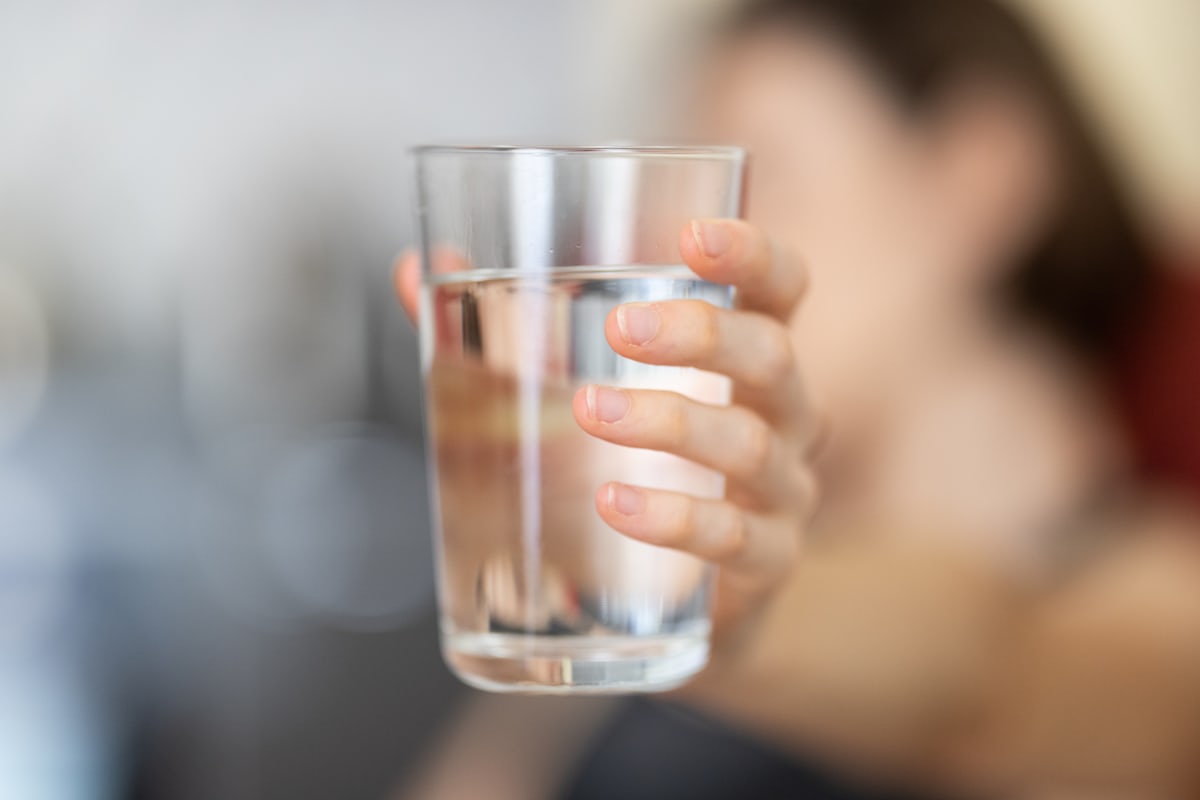
Most hydration advice opens with a number. Eight glasses, two litres, half your body weight in ounces — pick a source and you will find a figure stated with more confidence than the evidence behind it. The research is considerably less interested in the number than in the fact that it moves: between people, and between one day and the next. Through a Queensland summer, that distinction is the part worth having.
Where the Evidence Is Strongest
If one finding holds up consistently, it is that the brain notices first. A fluid deficit of just 1 to 3 per cent of body weight — under two kilograms for most adults — is enough to measurably affect concentration, working memory and mood. That is a small enough shortfall to reach on an ordinary hot afternoon without ever feeling especially thirsty, which is precisely what makes it worth knowing. The effect arrives before the discomfort does.
Physical capacity follows a similar curve. Heavy sweating in demanding conditions can cost 6 to 10 per cent of body weight in fluid, and endurance falls off well before that upper figure. Neither result is exotic. What recommends both is that they are consistent — which is more than can be said for several of the longer lists of benefits that get attached to drinking water.
Why "More" Isn't the Answer
The instinct after reading any of that is to simply drink more, and this is where the evidence pushes back. Requirements shift with age, sex, activity level, climate and health status, which is why the familiar eight-glasses rule persists as folklore rather than guidance. Rupa Health's review of the research also notes that overhydration is a real clinical condition — hyponatremia — seen most often in endurance athletes and people with reduced kidney function, where intake outpaces the body's ability to keep sodium in balance.
Two details are worth carrying out of that. During long or intense exercise, water alone is not sufficient; electrolytes matter too. And in older adults the sense of thirst diminishes with age, which makes thirst an unreliable prompt in exactly the group most vulnerable to falling short of what they need.
What This Means for Your Queensland Home
Put those together and the practical problem is not knowledge. Almost nobody is under-hydrated because they were unaware water is good for them. They are under-hydrated because on the day, repeatedly, they did not reach for it. In a Brisbane summer that gap costs more than it would in a cooler climate — the deficit builds faster, and the early signs read as ordinary tiredness.
Which is where taste turns out to matter more than it sounds like it should. Chlorine is in the supply deliberately, as the final safeguard against waterborne illness, and sediment picked up between the treatment plant and your tap varies by suburb and by the age of the plumbing. Neither makes the water unsafe. Both can make it less pleasant, and people drink less of what they do not enjoy.
Our benchtop and standing purifiers use a 3-stage filtration system — Micro Carbon, Nano Fact Plus and Post Carbon Block, replaced on a 6-month cycle — to reduce chlorine taste and odour and filter sediment at the point you actually pour the glass. That is a convenience argument rather than a health one. The water was already safe to drink; it simply becomes easier to keep reaching for, which on the evidence above is the part that was ever going to be difficult.